Services
Commercial EPC & MEES Compliance
Every commercial landlord in the UK has the same question: What is the most cost effective way of achieving an EPC B rating? A commercial EPC assessment is the starting point. A costed, guaranteed pathway to the target rating is the goal. Vantage delivers both.
We work with commercial property owners to assess EPC risk and model every viable route to compliance using real contractor pricing. We guarantee to hit any forecasted rating on works we undertake as Principal Contractor.
The minimum standard is rising, from EPC E now to EPC B by 2031. Landlords acting now will have a clear idea of their options, and enough time to confirm compliance before the deadline.
Get Your EPC Pathway
MEES and EPC Requirements for Commercial Landlords
MEES sets the lowest EPC rating at which landlords in England and Wales can legally let a commercial property. It already applies to the majority of leases in the market, and it doesn’t care whether a building is old or simply poorly managed, it only checks whether the rating clears the bar.
The current minimum is EPC E. In June 2026, the government confirmed its legislative direction, setting a proposed EPC B requirement from 2031 for buildings over 1,000 square metres and dropping the interim C by 2027 milestone.
For landlords holding assets below the B threshold, the real question now becomes: what’s the most cost-efficient route to get there?
Vantage Clarity™
Content TBC…
From baseline to EPC A: our commercial EPC pathway
-
Discuss your project
We begin with a Level 5 commercial EPC assessment, using Dynamic Simulation Modelling to produce an investment-grade baseline showing current ratingand the gap to compliance.
-
Discuss your project
This is where Vantage Clarity™ delivers its real edge. Rather than recommending a single route, we exhaustively test every viable combination of fabric, M&E and renewable interventions. Each route is ranked by cost, EPC uplift, operational energy impact and ROI.
-
Discuss your project
Every retrofit route is priced by the installers who will deliver the work, not by indicative cost plans. Indicative estimates routinely understate real delivery cost by 20 to 40 percent. Our cost plans are contractor-grade. Cost plans you can underwrite with confidence.
-
Discuss your project
Most consultancies forecast an EPC rating and walk away. Vantage guarantees the outcome. Because we deliver the works ourselves as Principal Contractor, we carry the EPC risk, not the client. A pre-approved EPC certificate is produced for the selected route before capital is committed.
Why Vantage
Principal Contractor accountability
As Principal Contractor under UK CDM legislation, we deliver the works and own the EPC outcome. Your target rating is locked in before capital commits. We are accountable for hitting it, not your advisor or consultant.
Clarity™ before capital
Most EPC strategies recommend one route based on one opinion. Clarity™ tests every viable combination of fabric, M&E and renewables, ranked by cost, uplift and buildability. You see every option, not just the one your consultant favours.
MEES-sequenced, not just rating-led
Every pathway is mapped against the EPC E baseline and the EPC B 2031 deadline. We don’t just hit a rating, we sequence the works so the asset stays compliant through each regulatory step and avoids stranded-asset risk.
Delivered on occupied assets
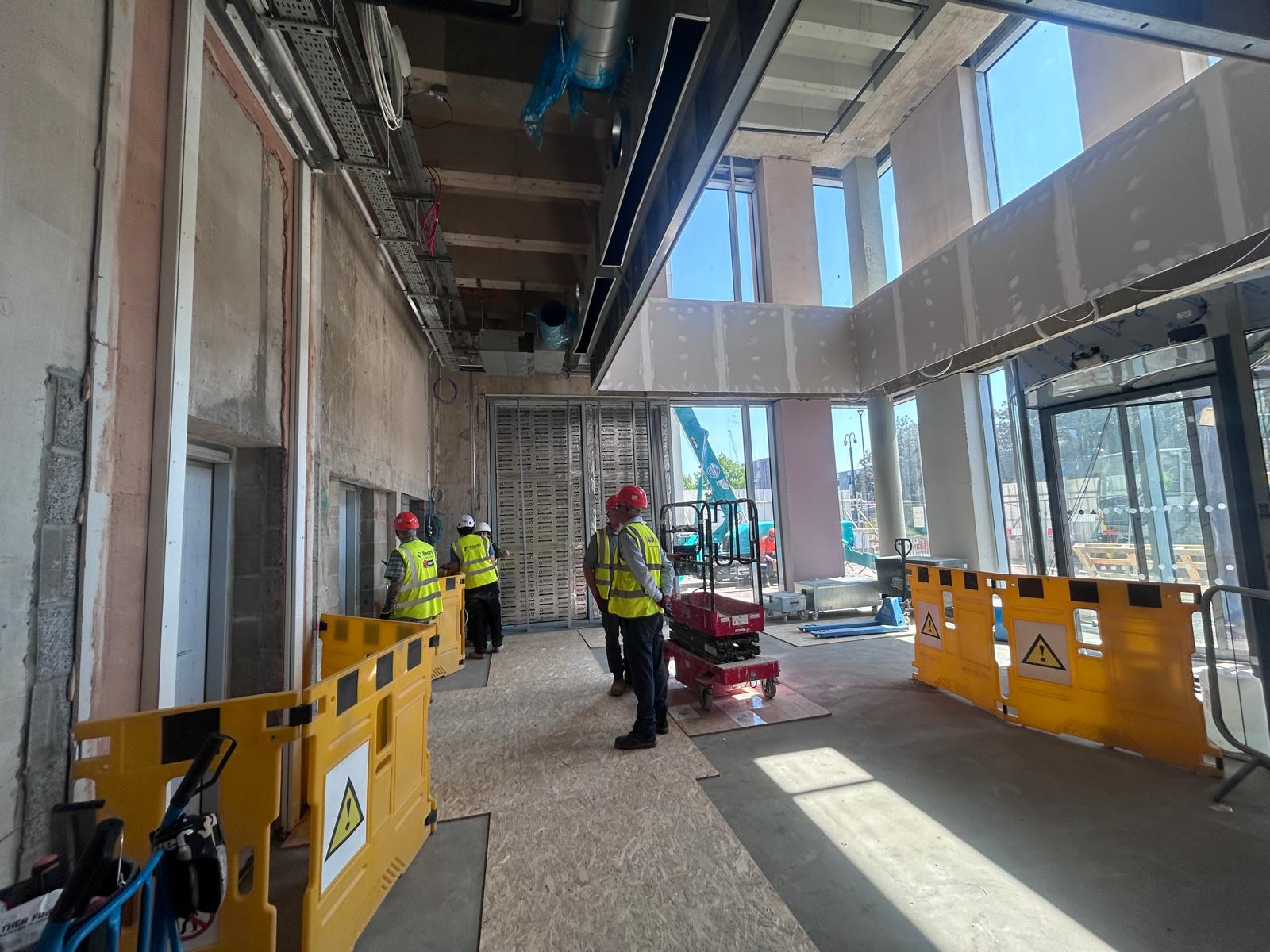
Every project we deliver is programmed around live, tenanted buildings. Our clients include institutional landlords and property funds managing occupied UK portfolios. Minimal disruption is not an aspiration, it is a requirement.
FAQs
-
A commercial EPC assesses non-domestic buildings using different methodology from a domestic EPC, often Dynamic Simulation Modelling for more complex assets, and against different compliance rules. Both use the same A to G scale, but a commercial rating reflects a wider range of building services and sits within MEES rather than domestic regulation.
-
Get In Touch
Commercial EPC assessment cost depends on the size and complexity of the building. We price retrofit and improvement work using contractor-grade quotes from the installers who deliver it, not indicative estimates.
-
Commercial buildings let under MEES currently need a minimum of EPC E. That minimum is confirmed to rise to EPC B by 2031. Landlords with assets below EPC B should plan for improvement well ahead of the deadline, not at it.
-
Improving a commercial EPC rating usually means a combination of measures: building fabric, heating and cooling, lighting, controls and metering, and on-site renewables. The right combination depends on the building. Vantage Clarity™ models the available routes and ranks them by cost, EPC uplift and buildability before any capital is committed.
-
A commercial property that doesn't meet the applicable MEES standard generally cannot be let, subject to available exemptions. The practical risk is less about the rating itself and more about lettability and asset value if action is left too late.
-
Yes. MEES includes a limited set of exemptions, for example where the required improvements aren't cost-effective or a necessary third-party consent can't be obtained. Exemptions are registered on the PRS Exemptions Register and reassessed periodically. They're the exception, not a permanent way round the standard.
-
The landlord is responsible for ensuring a valid EPC is in place at the point of sale or letting, and for meeting the applicable MEES standard while the property is let. Managing agents often coordinate this on the landlord's behalf, but the compliance obligation stays with the landlord.
-
Yes, within a defined scope. Where Vantage delivers the retrofit works as Principal Contractor, we guarantee the target EPC outcome for that project, fixed price, before works begin. We don't guarantee cost or outcome for work we don't deliver, and we're precise about what's included before anyone commits.